Trusted by Europe's leading organizations







When a platform meters revenue, every minute of downtime is money lost and trust damaged. DNA Solutions designs, builds and operates billing and tolling systems for European operators, sized for high volumes and audited standards.
Trusted by Europe's leading organizations
Billing engines and road charging systems are the deepest expertise in the house: custom platforms processing hundreds of millions of euros every month, built and maintained by the same engineers over multi-year engagements.
We design, build, and maintain high-volume billing and charging engines. Our custom platforms process hundreds of millions of euros every month, with full revenue assurance and compliance with European regulations.
Explore service →We build toll backends, billing engines, and cross-border charging architecture for European toll operators. Our rating pipelines are designed to process high volumes of GPS events.
Explore service →We integrate PCI-DSS compliant gateways into billing and tolling platforms, with PSP connections, idempotent flows and automated ledger reconciliation. Captures, refunds, chargebacks and settlements remain first-class events, so finance closes on matching numbers.
Explore service →These three services form one revenue chain: a toll platform rates road usage, a billing engine turns events into invoices, and a payment gateway turns invoices into money. We engineer all three with the same team, and a project can enter the chain at any point, from a complete platform to a single missing link.
Every platform in this pillar meters money, so we engineer revenue systems the way auditors read them. Revenue assurance is designed in from the first sprint: every event is logged with full lineage, every pipeline stage is reconciled, and every invoice line traces back to the usage that produced it. The largest platform we operate passes Deloitte audits on hundreds of millions of euros in monthly transactions, and the engineers who designed its architecture are the ones maintaining it.
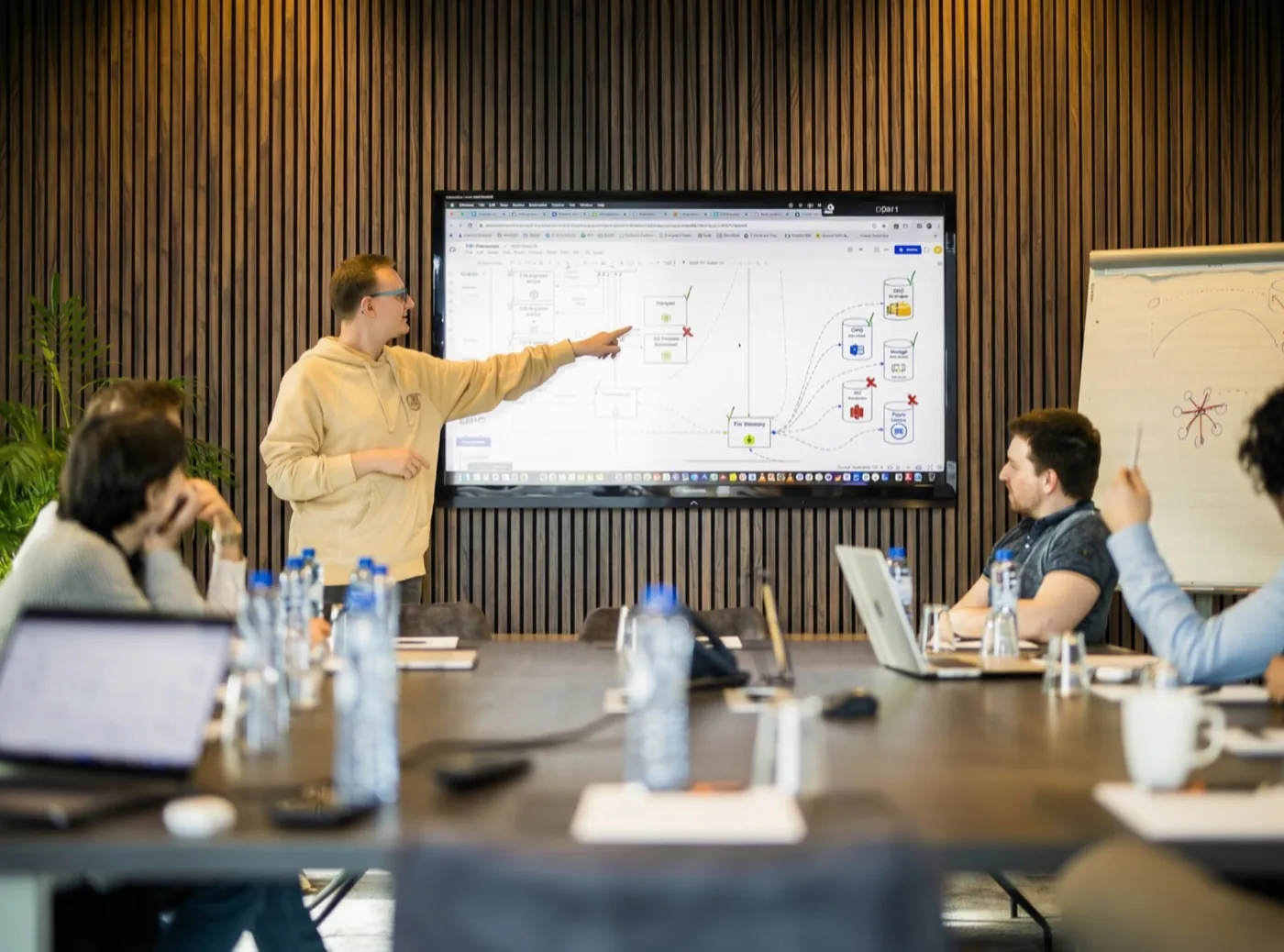
We design technology that lands on your bottom line. European enterprises trust us with extreme data volumes and critical financial pipelines.
See Client ResultsBy optimizing software licensing fees for several European organizations, we delivered over €1M in annual cost savings.
We built and maintain a Deloitte-audited billing platform processing €300M in audited transactions every month.
A senior team of engineers and consultants across Europe.
T-Systems, Satellic, European Commission: our longest engagements last because we deliver.
Plenty of vendors use the label. Here is what we hold our own platforms to, in concrete operational terms.
A revenue platform earns its SLA through architecture: redundant ingestion paths, health checks on every service, and alerting that pages an engineer before the operator notices anything. We instrument each pipeline stage with metrics and tracing, so when something degrades, the team sees which component, which tenant, and which volume window is affected within minutes.
Every 24 hours, automated jobs reconcile events ingested against events rated, amounts invoiced against ledger postings, and payments captured against PSP settlements. Any mismatch in count or value opens an investigation before the next billing cycle, catching discrepancies within hours and producing the traceability external audits require.
Tolling and billing operate under moving regulation: EETS interoperability, country-specific VAT, data retention rules, PCI-DSS on the payment side. We isolate these concerns into dedicated, configurable services, so a rate change or a new reporting duty becomes a configuration update with full audit lineage, deployed without touching the rating core.
Usage volumes are never flat: holiday traffic, month-end invoicing and settlement batches all create spikes. Event streams decouple ingestion from processing, while each stage scales horizontally under load. The platform holds throughput through a tenfold surge without delaying invoices or dropping events.
Two platforms currently running for European tolling operators.
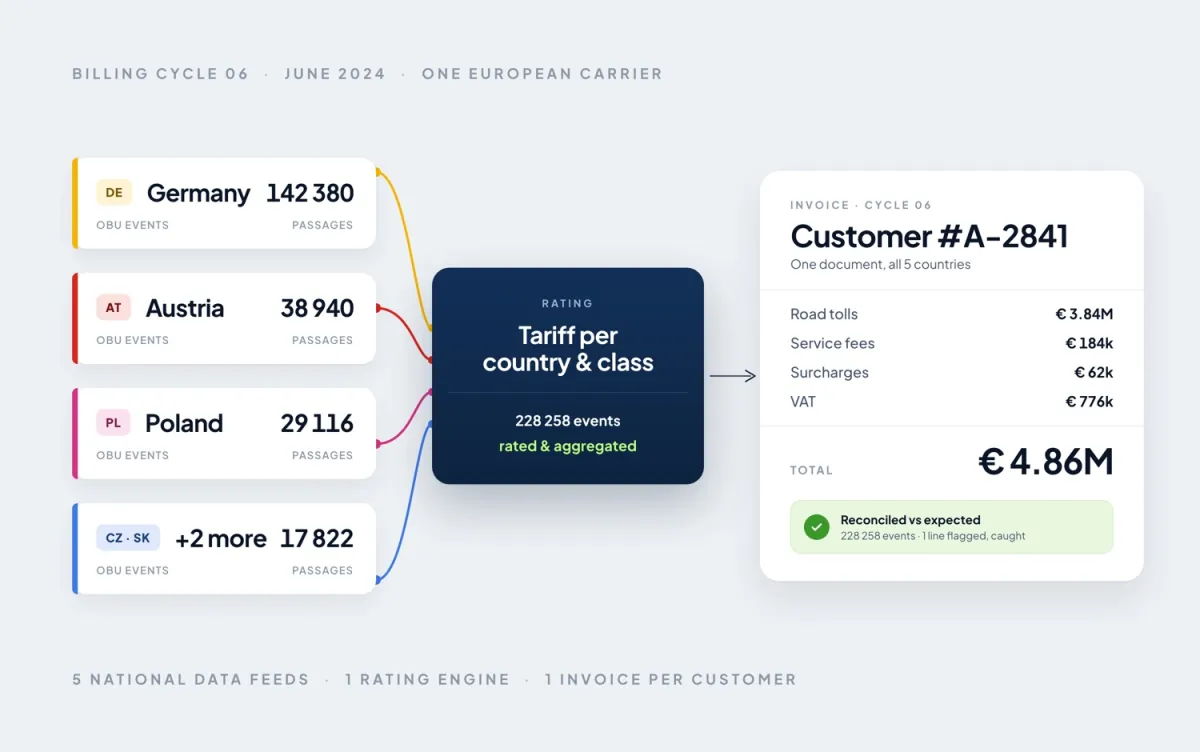
A European tolling consortium needed to rate high volumes of road-usage events into unified, cross-border invoices. DNA Solutions built a microservices billing platform handling multi-country tax and settlement rules.
Audit-grade, multi-country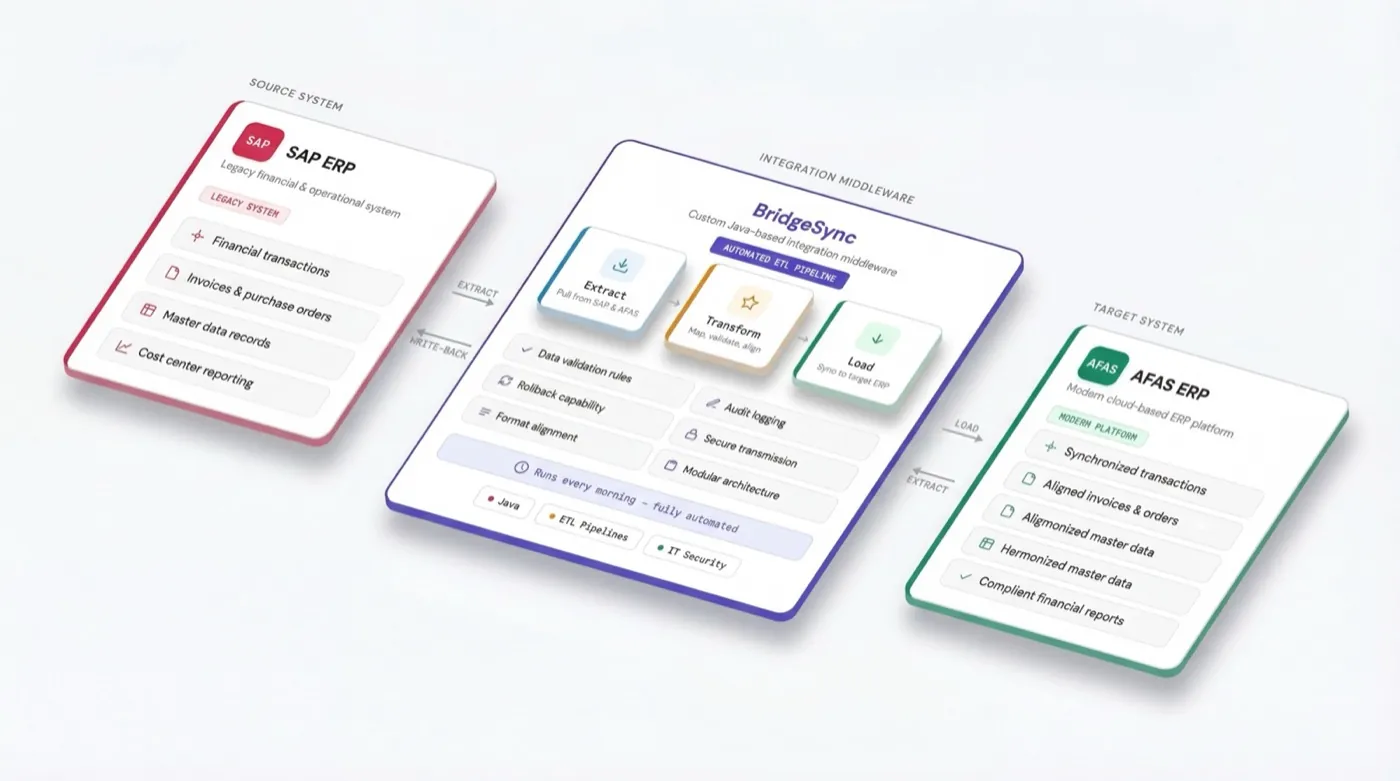
Satellic's finance team transferred data between legacy SAP and modern AFAS by hand every day, causing errors and compliance risk. We built BridgeSync, a custom middleware automating the entire flow.
Zero manual reconciliationSenior decision-makers on the billing, tolling and financial platforms we have delivered.
"DNA works with us to deliver digital systems at scale so that we can serve our customers digitally. They are both reactive to requests and proactive with ideas and proposals."

"I appreciated the collaborative spirit and the effort to deliver a reliable solution within a reasonable budget. The step-by-step approach with a demo before deployment made all the difference."

"DNA Solutions has delivered online tools that have made the client's employees and customers' lives easier. For instance, the client can now handle cases in a maximum of two days instead of five."

What operators want settled before committing to a multi-year platform engagement.
The typical shape is a long-term partnership: an initial build phase followed by continuous evolution and maintenance, carried by a stable, named team. Revenue platforms change constantly, with new countries, new tariffs, and new regulations arriving every year, so the value of keeping the original engineers on the system compounds over time. Our average client relationship runs around six years. That said, the engagement is structured in phases with clear deliverables, and each phase stands on its own: you are never locked into the next one by anything other than the results of the last one.
It starts small and concrete. After a first call, we run an architecture review of your current landscape: where usage events originate, how they are rated and invoiced today, where reconciliation breaks, and which constraints (regulatory, contractual, technical) the new platform must respect. From there we scope a first slice, typically one transaction flow taken end to end in 8 to 12 weeks, validated on your real data. That slice proves the rating logic and the integration points before any wider commitment, and it gives both sides a factual basis for planning the rest.
You do, entirely. Source code, database schemas, infrastructure-as-code, and documentation are your property, deployed on your own cloud account or on-premise environment. We build on an open-source stack (Java, PostgreSQL, Kafka) precisely so there are no proprietary licenses sitting between you and your own system. At handover we run a structured knowledge transfer with your engineers, covering the architecture, the deployment pipeline, and the operational runbooks. Continued maintenance by our team is a choice you renew, never a dependency built into the design.
Yes, and it happens regularly. We begin with a code and architecture audit to map the real state of the system: undocumented behavior, fragile integrations, reconciliation gaps, and the operational risks hiding in scheduled jobs. The first months focus on stabilization, including monitoring, alerting, and daily reconciliation if they are missing, so the platform becomes observable and predictable. Only then do we start evolving it. Operators usually come to us in this situation when invoices have started drifting from usage data, and the audit tells us within weeks how deep the problem goes.
By never running a big-bang cutover. Whether we are replacing a legacy engine or adding a payment gateway, the new component runs in parallel with the old one, processing the same events, while automated reports compare both outputs at every billing cycle. A customer segment only switches over once its invoices match to the cent. The approach takes longer on the calendar, but billing continues uninterrupted throughout, and the migration remains reversible at every step until the final switch.