★★★★★ 4.87/5 on Sortlist, See client reviews

Cloud migration without business disruption

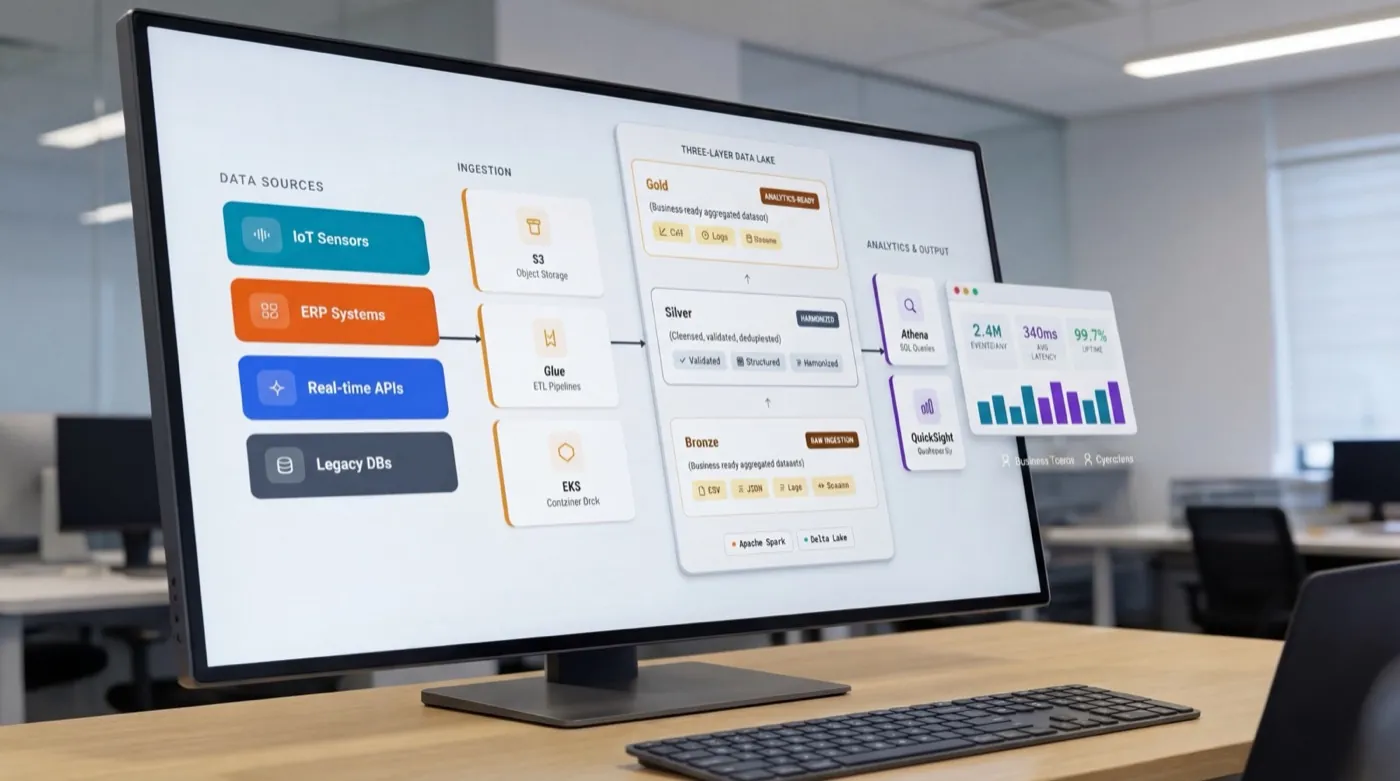
Re-platforming legacy infrastructure into scalable, secure and cost-efficient cloud environments. DNA Solutions migrates Oracle and SAP workloads to cloud-native architectures, with a progressive approach that keeps production running.

Why cloud migration needs careful sequencing

DNA Solutions migrates legacy enterprise infrastructure to the cloud in phases, moving Oracle and SAP workloads to cloud-native architectures while production keeps running. Each step reduces operational and licensing cost. Our senior team has re-platformed critical data environments for European transportation and telecom operators. Every workload runs in parallel with the legacy environment until validation matches its output, so the cloud migration stays reversible until you switch.
DNA Solutions
by the numbers

We design technology that lands on your bottom line. European enterprises trust us with extreme data volumes and critical financial pipelines.

See Client Results
Cost
€1M

Annual savings across European clients

By optimizing software licensing fees for several European organizations, we delivered over €1M in annual cost savings.

Scale
€300M

Monthly audited transactions

We built and maintain a Deloitte-audited billing platform processing €300M in audited transactions every month.

Team
38+

Engineers & consultants

A senior team of engineers and consultants across Europe.

Trust
6 years

Average client relationship

T-Systems, Satellic, European Commission: our longest engagements last because we deliver.

How DNA Solutions manages the migration process

A migration is measured by what keeps running while it happens. Here is the sequence we follow to leave production untouched.

Before moving a single workload, we map your existing estate: licensing footprint, data dependencies, residency constraints and integration points. On large Oracle and SAP environments this audit often surfaces a significant share of removable cost before migration even begins. The assessment produces a phased migration plan, with each workload sequenced by risk and by the cost it removes, so the business case is clear before any cutover.

We never run a big-bang cutover. Each workload is moved and validated in parallel with the existing environment, with the legacy system staying fully operational until the new platform matches its output. We rely on Change Data Capture for continuous synchronization and on validation scripts that compare source and target, so the migration runs with no data loss and remains reversible until you are ready to switch over.

Migration is only worthwhile if it lands on the bottom line. We right-size compute, map proprietary database workloads onto managed or open-source equivalents where it makes sense, and remove licensing carried over from the legacy stack. Post-migration we measure the cost actually removed against the pre-migration baseline, so the saving is documented rather than assumed.

We favor an open-source and standards-based stack so the platform you end up with is not tied to a single vendor. Infrastructure is managed as code, environments are reproducible, and the architecture is documented end to end. At handover we run a structured knowledge transfer with your engineers, so your internal teams can operate and extend the platform on their own rather than depending on us by design.

From cloud architecture to handover

DNA Solutions engineers complete cloud migration paths for European enterprises. From re-platforming legacy Oracle and SAP workloads to securing multi-cloud architectures, our approach is built to reduce cost without disrupting production.

What We Build

Cloud-native re-platforming

Re-architecting Oracle and SAP workloads into cloud-native services. Migrations run in phases, with each workload validated against the legacy environment before cutover, so production is never interrupted.

Secure multi-cloud architecture

Architecture across AWS and Azure for regulated environments, including GDPR and BaFin. We right-size compute and pick the hyperscaler based on workload profile and data residency requirements.

Infrastructure as Code (IaC) pipelines

Provisioning and configuration managed as code, including Terraform and Ansible. Reproducible environments, version-controlled infrastructure, and automated deployment pipelines that your own engineers can run without depending on us.

Migration challenges across complex sectors

Workloads differ sharply between telecom, tolling and mobility. We keep one phased migration approach and shape it to each one's data and cost profile.

Cloud projects delivered by DNA Solutions

How we re-platform critical infrastructure to the cloud for European enterprises.

What clients value about our work

Senior decision-makers on the platforms and infrastructure we have delivered.

★★★★★
"DNA works with us to deliver digital systems at scale so that we can serve our customers digitally. They are both reactive to requests and proactive with ideas and proposals."
Peter Hopkins
Peter HopkinsHead of financial platforms Tolling, T-SYSTEMS
★★★★★
"I appreciated the collaborative spirit and the effort to deliver a reliable solution within a reasonable budget. The step-by-step approach with a demo before deployment made all the difference."
Alexander Haye
Alexander HayeBusiness Transformation Manager, SATELLIC NV.
★★★★
"The quality of the people I worked with and the seriousness of the project management stood out. DNA built a backend and app for a highway toll system, and the human side of the company is truly remarkable."
Renaud Dwelshauvers
Renaud DwelshauversDirector, DWEL CONSULTING.

Questions before moving to the cloud

The questions that come up most before moving critical infrastructure.

We migrate workloads in phases rather than running a single big-bang cutover. We start with an infrastructure assessment that maps your existing estate, including licensing footprint, data dependencies, residency constraints and integration points, and produces a phased migration plan sequenced by risk and by the cost each workload removes. From there we move and validate one workload at a time, with the legacy environment staying fully operational until the new platform matches its output to the record. We rely on Change Data Capture for continuous synchronization and on validation scripts that compare source and target, so the migration runs with no data loss and remains reversible until you are ready to switch a segment over. You see the business case before any commitment to the full move.

Yes. We re-platform legacy Oracle and SAP environments to cloud-native architectures, including data lakes, with the goal of reducing operational and licensing cost. Our senior team brings more than 15 years maintaining and migrating Oracle systems across European telecom and infrastructure platforms. We begin with a licensing and schema audit, which on large estates often surfaces a significant share of removable cost, then build secure integration layers and ETL pipelines that bridge your on-premise databases with the new platform. Where it makes sense we map proprietary database workloads onto managed or open-source equivalents, such as PostgreSQL, so licensing carried over from the legacy stack is removed rather than migrated. The migration runs with no data loss and stays reversible until each segment is validated.

We work primarily with AWS and Azure, including hybrid and multi-cloud setups for regulated environments such as those under GDPR and BaFin. The hyperscaler choice is never a default; it depends on the workload profile, on existing tooling, and on where your data is legally allowed to reside. We right-size compute and storage so the target environment matches actual operational load rather than the oversized legacy footprint, and we favor managed services where they cut maintenance without creating lock-in. Provisioning is handled as Infrastructure as Code, using tools such as Terraform, so every environment is reproducible, version-controlled and auditable. Security is built in from the start, with encryption, identity and access controls, and network segmentation defined alongside the infrastructure rather than added afterwards.

The migration is designed to keep production running throughout. Because we move one workload at a time rather than all at once, the legacy environment stays fully operational while the new platform is built and tested in parallel. Before any segment is switched over, validation scripts compare the output of both systems so we only cut over once the new platform matches the old one to the record. If something is wrong, the migration remains reversible, and you stay on the legacy system until it is resolved. Cutovers are planned around your operational calendar to avoid peak periods. After the move we measure the cost actually removed, so the saving is documented rather than assumed, and we hand over reproducible Infrastructure as Code so your team can operate the platform independently.

Assess your
cloud priorities

A short call to discuss your current infrastructure, workloads and licensing footprint, with no obligation. We respond within one business day.

Meet an Expert